01 — The client and the context
A seed company that lives by sowing windows
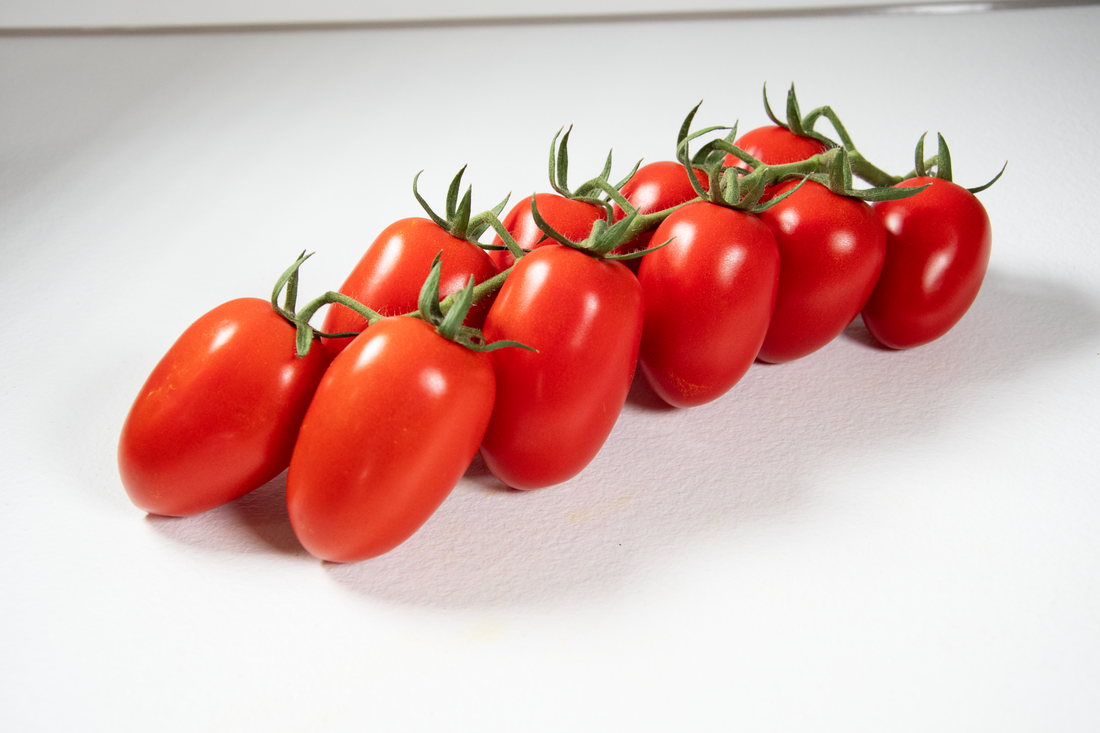
SEEDS Technologies Italia develops and produces vegetable seeds from its headquarters in Vittoria, in the province of Ragusa, Sicily: tomato, pepper, zucchini and rootstock. The heart of the company is genetic research — that's where investment goes first — and the rest is a logistics machine that has to run with precision.
Around fifty SKUs in the catalog, over a hundred orders a month, six agents in Italy and abroad. And a hybrid operating model: not just distribution, but in-house production and processing outsourced to external plants, with material constantly going out and coming back.
“Knowing in real time where the material is, what state it's in and when it will actually be available for sale.”
02 — The challenge
Parallel Excel files and a season that won't wait
Before QTNOVA, operations ran on disconnected Excel files and a limited legacy system. Each department worked on its own data, and with material flowing constantly between headquarters and subcontractors, the two versions of reality almost never matched.
In the seed business this matters more than anywhere else, because the calendar isn't negotiable: you sell within transplant windows. If a batch isn't where the system says it is, or doesn't arrive on time, the customer doesn't put off the purchase by a month — they miss the crop cycle. Three problems, always the same:
-
Blind warehouse
No management of lots and expiration dates, and no visibility into material being processed at subcontractors. No way to trace a batch's origin or destination, and expired products stayed on the shelves without anyone noticing.
-
Selling blind
Orders accepted with no availability visible at the quote stage and no real replenishment date. Frequent stockouts and overselling, and no way to give customers firm lead times.
-
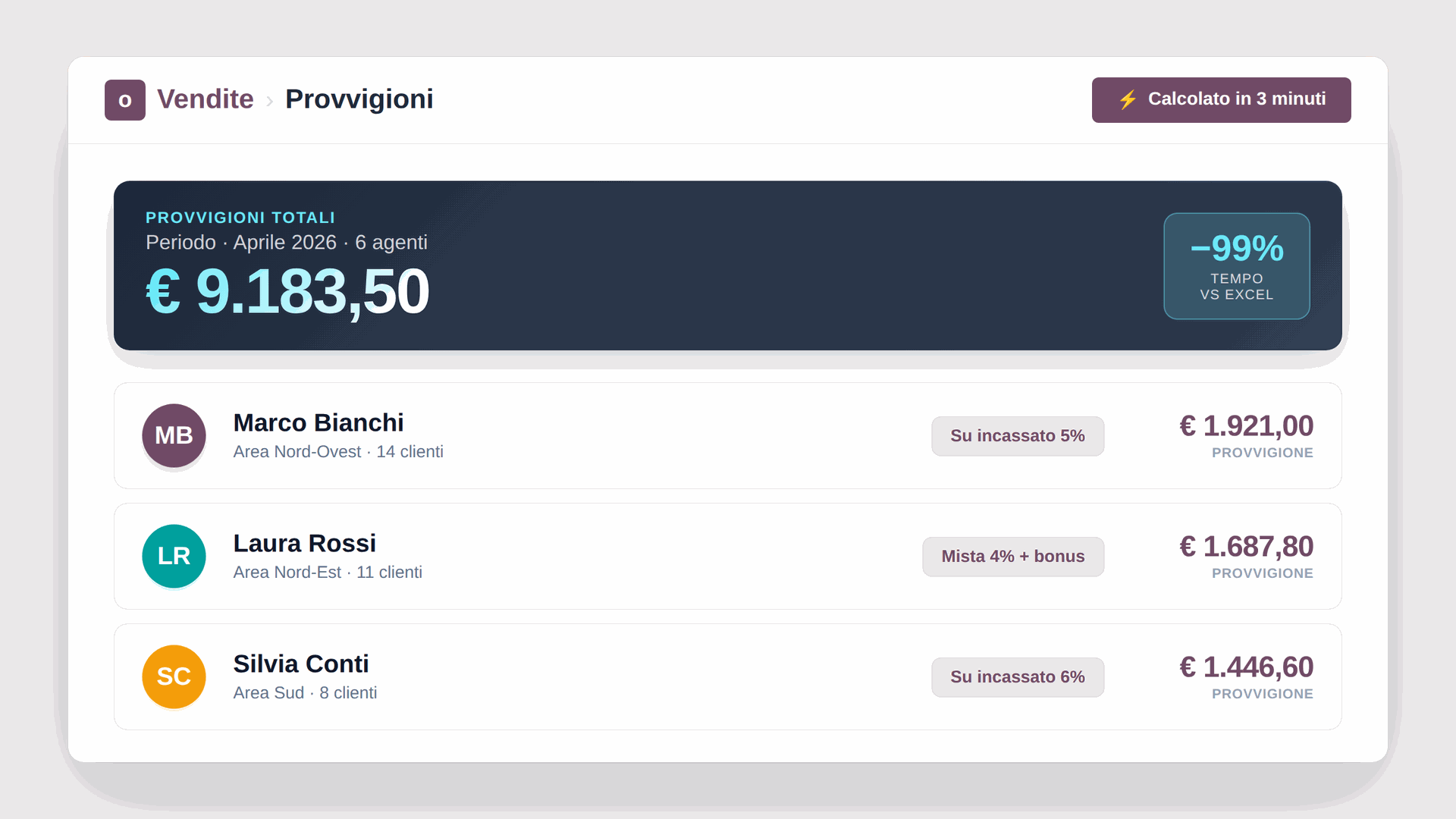
Commissions by hand
Calculated entirely in Excel, with different rules for each agent: two days a month just to tally up invoiced amounts, collected amounts and partial payments. With human error always lurking.
And on top of all this, the risk nobody wants to run: without lot traceability, a phytosanitary inspection or having to recall a batch isn't a procedure, it's an emergency.
03 — The solution
One system, updated in real time
Odoo as the central ERP, with Sales, Inventory, Subcontracting, Invoicing and Commissions connected in a single architecture: every module writes to the same database at the same instant. Four features did the heavy lifting.
Lots and expiration dates
Traceability
- Lot and expiration date assigned at goods receipt and in production.
- Automatic alert on batches nearing expiration.
- Origin and destination of every lot traceable after the fact.
External subcontracting
Material at subcontractors
- Precise tracking of everything sent to subcontractors.
- Forecasts of returns and processing scrap.
- No information gaps between headquarters and the external plant.
Custom commissions
Custom-built module
- Different calculation rules for each agent.
- Logic based on invoiced, collected or partially collected amounts.
- Calculation triggered automatically at invoicing.
Approval workflow
Control
- Explicit status changes along the order cycle.
- Manual override where the case calls for it.
- No more shortcuts outside the system.
- Draft
- Sent
- Sales order
€4,285.62
S00742 · Azienda Agricola Ficarra
- Customer
- Azienda Agricola Ficarra
- Assigned agent
- Marco Bianchi
- Delivery date
- 10/05/2026
Datterino tomato F1 · treated seed
[SEM-POM-DT01] · pack of 5,000 seeds
12packs requested
“On a very tight schedule and with very little notice, we managed to migrate from the old ERP to the new one and get the system up and running without any problems.”
04 — The workflow
Four steps, from customer record to commission
The process is linear by design: each step inherits what it needs from the one before, so there's no point where data has to be re-entered by hand.
-
Customer record
The agent is assigned directly to the customer in the CRM: every subsequent order inherits it automatically, with the option to override it manually when needed.
-
Sales order
The operator sees availability in real time, selects the specific lot and gets the calculated replenishment date from the system.
-
Inventory
Lot and expiration date are assigned at goods receipt or in production, and tracking continues on material going out to subcontractors, returns and scrap included.
-
Invoice and commissions
At invoicing, commissions calculate themselves according to the agent's rules. Nobody needs the parallel Excel files anymore.
Lot traceability, always
Every movement — production, warehouse, subcontracted processing — recorded in real time.
LOT-2026-A47Available
Datterino tomato F1
- Quantity
- 142 packs
- Viable until
- 12/2027
- Location
- WH/Stock/A-12
- Origin
- MO/01892
LOT-2026-X12Subcontracting
Bicolor pepper F1
- Quantity
- 85 packs
- Expected return
- 09/12/2026
- At
- Sementi Service S.r.l.
- Reference
- SC/0142
LOT-2025-K72Expiring soon
Dark zucchini F1
- Quantity
- 7 packs
- Viable until
- 10/2026
- Location
- WH/Stock/B-04
- Alert
- Active for 30 days
LOT-2026-C03Available
Vigor rootstock F1
- Quantity
- 320 packs
- Viable until
- 06/2028
- Location
- WH/Stock/A-03
- Origin
- MO/01977
05 — The results
Total control, and two days a month back
Time to close the month's commissions
−99%
- Tracked inventory
- Lot and expiration date on every item, with instant location and precise date management.
- Actual availability when selling
- An end to overselling and selling stock you don't have: sales reps see what can be sold right now, not what the records said yesterday.
- Monitored subcontracting
- Full visibility into material sent to subcontractors and planned returns.
- Compliance and safety
- With lot traceability, a phytosanitary inspection or a batch recall becomes a procedure, not an emergency.
06 — The value
Today SEEDS works from data, not guesswork
The project started on a very tight timeline: contract signed on December 24, 2025, work under way in January 2026, with data migration from the previous system, training and the necessary customizations.
- One version of the facts Sales, warehouse, production and administration read the same data at the same moment. Discrepancies between departments have nowhere left to creep in.
- Time given back The twenty hours a week of manual reconciliation have gone back to real work, and the two days a month spent on commissions with them.
- Promises kept A delivery date calculated by the system is a date you can confirm to the customer without crossing your fingers.
- Risk under control Lot traceability isn't only useful when an inspection arrives: it means always knowing what went out and where it went.
“We appreciated the consistency between what was discussed at the start and what was actually delivered. All in all, a choice we would make again, and one we'd recommend to other companies evaluating an ERP.”